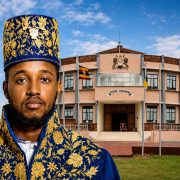


Some losses are difficult to put into words. The passing of His Majesty, Omukama Oyo Nyimba Kabamba Iguru Rukidi IV, King of Tooro, is one of them.
At just 34 years of age, His Majesty’s life came to an untimely end on 27th August 2026, bringing to a pre-mature close of a remarkable journey that began when, at only three years old, he inherited the throne of Tooro Kingdom.
For nearly three decades, the name Oyo was inseparable from the story of Tooro. He was the little boy who became a King; the child who grew up under the gaze of a kingdom; and, with time, a young man who came to carry the responsibilities of a centuries-old institution and the hopes of its people.
His story was extraordinary not simply because he became one of the world’s youngest monarchs, but because he had to grow into a role that had been entrusted to him before he was old enough to understand what it meant.
King Oyo’s life reminds us that heritage is not only what we inherit. It is also what we are entrusted to carry.
He inherited a crown, but with it came the stories, memories, traditions and identity of the people of Tooro. As he grew, so did his understanding of what that responsibility meant. His reign unfolded in a Uganda that was changing rapidly, as young people navigated a world shaped by technology, globalisation and new ideas while communities continued to hold on to traditions that connected them to those who came before.
In that changing landscape, King Oyo represented a bridge between generations. His journey showed that tradition need not belong only to the past. Cultural institutions can evolve, remain relevant to younger generations and continue to provide people with a sense of belonging and identity.
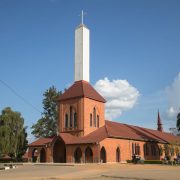
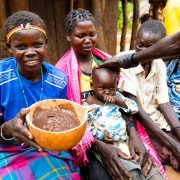
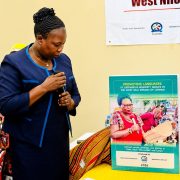
Through our work in Tooro, we at the Cross-Cultural Foundation of Uganda have had the privilege of spending time with communities, young people, cultural custodians, educators and traditional cultural leaders. They have taught us that the richness of Tooro’s heritage cannot be found in one place or represented by one person alone. It lives in the stories passed from grandparents to grandchildren, in young people learning about where they come from, in community spaces where memories and knowledge are preserved, and in the values that communities continue to draw upon as they respond to the challenges of the present.
We have encountered this living heritage in schools, where young people are discovering the histories and traditions of their communities; in community museums, where knowledge and memory are kept alive; in classrooms where cultural identity and rights are explored; and among traditional leaders and communities working to build safer and stronger societies. These encounters have deepened our appreciation of the cultural institution that King Oyo represented.
The Omukama was not simply a title. He was part of a living cultural heritage, one that connects generations and gives people a sense of who they are and where they belong.
It is easy, in remembering King Oyo, to focus on the extraordinary circumstances of his accession to the throne. But behind the crown was a human being who spent almost his entire life in the service of an institution and a people. He grew up in public. He matured under responsibility. He became a young leader at a time when many of his peers were still discovering who they were.
His passing therefore leaves a profound sense of sadness, not only because a King has died, but because a life that still held so much possibility has ended too soon.
At 34, there should have been more years. More conversations. More dreams. More opportunities to serve.
Yet perhaps the enduring nature of cultural heritage lies precisely in what remains after an individual is gone.
The children who continue to learn. The stories that continue to be told. The communities that continue to safeguard their heritage. The institutions that continue to bring generations together. The values that continue to shape how people understand who they are.
These are the things that allow culture to outlive any one generation. King Oyo inherited the Tooro crown from those who came before him. He carried it through his own generation. And now, in his passing, the responsibility of carrying Tooro’s heritage forward belongs to those who remain.
At CCFU, we mourn His Majesty with a profound sense of respect and gratitude for the opportunity to have encountered, through our work, the people and cultural heritage of Tooro. We stand with the Batooro, the Royal Family, the Babiito, the Tooro Kingdom and all those who loved and respected their King.
We mourn the man.
We honour the King.
And we celebrate the living heritage of the people he served.
May the stories of his life continue to be told. May the heritage of Tooro continue to flourish. And may the generations that follow carry forward, with pride and care, the inheritance entrusted to them.
Omukama Atulize.
Enkuba Etutire.
May His Majesty Omukama Oyo Nyimba Kabamba Iguru Rukidi IV rest in peace.