

There are histories written in books, and there are histories carried by people.
In the hills of northern Karamoja, a small community carries a history preserved through language, stories, ceremonies and the memories of its elders.
For the Nginyangia of northern Karamoja, much of their history has travelled from one generation to another through the voices of elders, ceremonies, stories, traditional knowledge and a language that connects people to their past.
The Nginyangia, also known as the Nyangia people, are one of Uganda’s Indigenous Minority Groups, predominantly found in Karenga District. According to the 2014 National Population and Housing Census, they numbered 9,634 people.
But a population figure tells only part of their story.
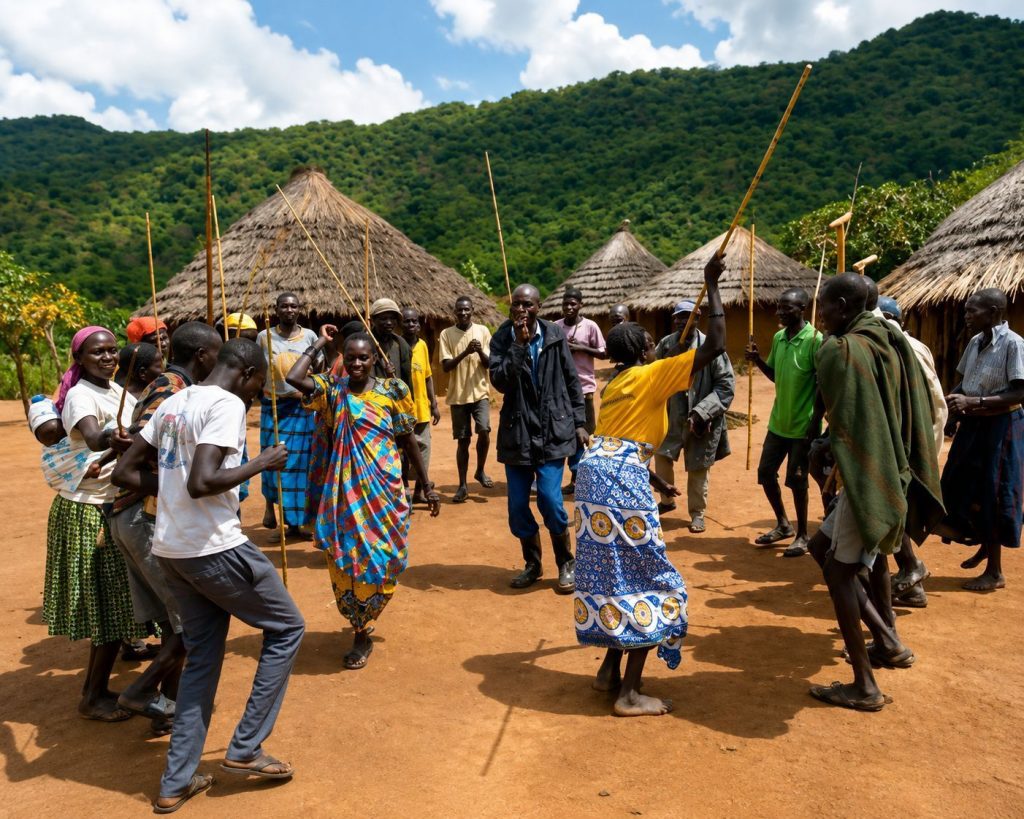
To understand the Nginyangia is to understand the connection between people, place and language: Nginyangia are the people, Nyangia is their home, and Edeb Nyangi is their language.
A history of movement and resilience
Nginyangia oral history traces the community’s origins and migration through the northern parts of East Africa. Their ancestors moved southwards over generations, shaped by drought, famine, insecurity and the search for safer and more sustainable places to live.
Their journey was also a journey of learning. Along the way, they encountered neighbouring communities, exchanged knowledge and adapted to new environments before eventually settling around the Nyangia hills.
For the Nginyangia, the hills became much more than a place to live. They provided shelter, food and resources and became part of the community’s cultural identity.
Their history is therefore not simply one of migration. It is a story of adaptation, survival and belonging.
When culture was simply life
Nginyangia heritage has traditionally been woven into everyday life.
Birth, initiation, marriage, harvesting and death were marked through ceremonies that brought families, clans and communities together. These practices did more than mark important moments; they taught people their responsibilities and strengthened relationships between generations.
The community also developed extensive knowledge of its environment. Farming, hunting and gathering were supported by an understanding of seasons, weather, plants and animals. Rain was particularly important, with traditional knowledge and ceremonies associated with rainfall and agricultural productivity.
This knowledge was practical, but it was also cultural. It was passed from elders to younger generations through observation, participation and storytelling.
Stories that carry a people
Perhaps one of the most powerful ways the Nginyangia have preserved their heritage is through oral tradition.
Stories such as Why Honey Caused Death, An Elder’s Ornament and The Lost Child carry lessons, values and memories from one generation to another.
For an elder, telling a story is more than remembering the past. It is an act of teaching.
The story becomes a bridge between generations.
And language is the bridge’s foundation.
Edeb Nyangi, the Nginyangia language, carries names, knowledge, expressions, stories and ways of understanding the world. When a language weakens, the concern is not simply that people may speak fewer words in it. Knowledge embedded within those words can also become harder to transmit.
For a community whose heritage has historically been passed on orally, this makes language safeguarding particularly important.
A culture facing change
Today, the Nginyangia face challenges similar to those experienced by many Indigenous Minority Groups in Uganda.
Changing livelihoods, dominant languages, formal education, negative perceptions of minority cultures and weakening intergenerational transmission can all affect the way cultural knowledge is passed on.
Cultural loss does not always happen dramatically.
Sometimes it happens when a child no longer learns the language of their grandparents.
When an elder dies before sharing a story.
When a ceremony is no longer practised.
When traditional knowledge is no longer considered useful.
One small break in the chain can eventually make it difficult for the next generation to reconnect with its heritage.
Yet the Nginyangia story is not simply a story of loss.
It is also a story of resilience.
Keeping the story alive
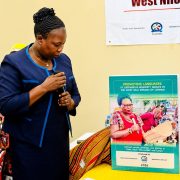
In 2022, the Cross-Cultural Foundation of Uganda (CCFU) documented the oral history, culture and traditions of the Nginyangia to help safeguard this heritage, strengthen cultural rights advocacy and make knowledge about the community more accessible to younger generations.
Developed through consultations with Nginyangia elders and community resource persons, the publication documents their history, ceremonies, beliefs, legends, livelihoods, traditional knowledge, hunting practices, weather knowledge and relationships with neighbouring communities.
It also places particular attention on the community’s language and the importance of ensuring that younger generations have access to their cultural heritage.
Documentation, however, is only one part of safeguarding culture.
A publication can preserve a story on paper. It is people who keep that story alive.
The future of Nginyangia heritage will therefore depend on opportunities for elders to share their knowledge, young people to learn it, and the community to continue speaking, practising and adapting its culture in a changing world.
A living heritage
The Nginyangia remind us that Uganda’s cultural heritage is not found only in famous monuments, festivals or large communities.
It also lives in small communities, in endangered languages, in oral traditions, in knowledge of the land and in memories carried by elders.
A community of fewer than 10,000 people can carry knowledge that is valuable not only to itself, but to Uganda’s cultural story as a whole.
Safeguarding Nginyangia heritage is therefore not about freezing a culture in the past. It is about ensuring that the people themselves have the space and opportunity to remember, practise, adapt and pass on what makes them Nginyangia.
Because heritage survives not simply when it is documented, but when it is lived, shared and passed on.