


For the Basongora, cattle are more than livestock. They are part of who they are.
Cattle have traditionally shaped almost every aspect of Basongora life, from food and livelihoods to social organisation, cultural practices and the transmission of knowledge from one generation to another. Milk, blood and meat formed an important part of the traditional diet, alongside foods prepared from cow ghee, such as eshabwe and kyitaama.
Even the community’s social organisation reflects this deep relationship with cattle. Some Basongora clans are associated with practices and observations connected to cattle keeping. The Abaitira, for example, are associated with okwitira, the smoking of ebyanzi and ebirere for milk preservation, while the Abayaga are associated with the wind and observations of cattle as they graze.
These practices reveal something important about Basongora heritage: cattle keeping is not simply an economic activity. It is a way of life through which knowledge, values, identity and a sense of belonging are expressed.

A heritage shaped by the land
The Basongora’s connection to land is equally central to their history. The community traditionally grazed its cattle in areas that later became part of what is now Queen Elizabeth National Park. When the park was established in 1954, the Basongora were evicted from their traditional grazing areas. Some later moved into the Virunga region, where they faced further displacement by authorities in the Democratic Republic of Congo.
Their return to Uganda with their cattle brought them into renewed conflict with wildlife authorities, who were concerned about the impact of livestock grazing within the protected area. The Basongora, however, maintained that these were their traditional pastures long before the area became a national park.
Following tensions and allegations of excessive force during attempts to remove them, the Government of Uganda offered the Basongora alternative land outside the park in Kasese District in 2007. The government also acknowledged its responsibility to address the historical injustices and post-independence marginalisation experienced by the community.
Yet, for the Basongora, the question of land remains unresolved. The land provided has been described by community members as inadequate, while the settlement process itself generated tensions with other communities. Competition over land between Basongora pastoralists and cultivators has continued, with accusations of encroachment and disputes over access and ownership.
In February 2025, violence was reported in Kabukero Village in Kasese, when cultivators reportedly attacked Basongora cattle camps, accusing the pastoralists of occupying their territory.
These continuing tensions are more than land disputes. They are part of a much longer history of displacement and uncertainty that continues to shape the lives and livelihoods of the Basongora.
When culture begins to disappear
Displacement does not only affect where people live. It can also affect what they remember, what they practise and what they can pass on to their children.
For the Basongora, this is increasingly visible in the erosion of traditional knowledge and cultural practices.
One of the most important traditions at risk is Koogere, an oral tradition that forms part of the collective memory and cultural expression of the Basongora, Banyabindi and Batooro communities in the wider Kasese region.
Koogere carries stories, values, knowledge and memories that have traditionally been transmitted through storytelling and community gatherings. But fewer storytellers are now able to reproduce its episodes, while traditional gatherings are increasingly competing with modern forms of entertainment.
When the spaces in which stories are told disappear, opportunities for younger generations to learn from elders also diminish.
Recognising the vulnerability of the tradition, Koogere was inscribed on UNESCO’s List of Intangible Cultural Heritage in Need of Urgent Safeguarding in 2015.
Keeping stories, skills and livelihoods alive
Safeguarding Basongora heritage therefore requires more than documenting the past. It means creating opportunities for cultural knowledge to remain relevant and valuable in people’s lives today. This is where CCFU’s work with communities becomes important.
Since 2015, CCFU has supported the Basongora through oral history documentation, working with community members to record memories, stories, knowledge and experiences that might otherwise disappear. Oral history provides an opportunity for elders and knowledge holders to share what they know while creating a record that can support learning by younger generations.
But safeguarding heritage is also about recognising that culture can contribute to livelihoods.
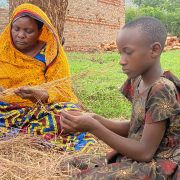
The Foundation also supports women’s cultural enterprises, helping women organise around cultural products and skills while strengthening their ability to turn these into sustainable livelihood opportunities. The approach recognises women not simply as custodians of culture, but also as entrepreneurs and active contributors to the local economy.

To strengthen these enterprises, CCFU provides capacity building in financial management and marketing. These skills help women and community groups manage their resources, understand their customers, price and promote their products and make better business decisions.
CCFU also helps create linkages to markets through exhibitions and other platforms. These spaces provide opportunities for women to showcase their products, connect with potential buyers and increase the visibility of Basongora cultural expressions.
In this way, cultural safeguarding and economic empowerment reinforce each other.
When cultural knowledge creates opportunities, communities have greater incentive and capacity to keep that knowledge alive.
The Koogere Oral Tradition of the Basongora
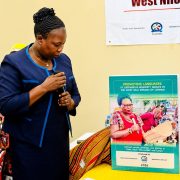
There have also been renewed efforts to raise awareness about Koogere and Uganda’s wider intangible cultural heritage. In August 2025, the Uganda Community Museums Association (UCOMA), in partnership with UNESCO, hosted an exhibition in Kampala featuring Koogere among Uganda’s internationally recognised intangible cultural heritage elements.
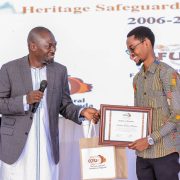
In the same month, CCFU convened a National Dialogue on Safeguarding Intangible Cultural Heritage, bringing attention to the need to protect Uganda’s living heritage, with Koogere among the traditions highlighted.
Such initiatives create important spaces for communities and cultural practitioners to share their heritage with wider audiences and remind the public that intangible cultural heritage is not simply about old customs. It is about living knowledge, creativity, identity and relationships that continue to evolve.
The story of the Basongora is therefore not only a story of displacement, land conflicts and cultural loss. It is also a story of resilience.
Despite profound changes to their lives and landscapes, Basongora cultural identity continues to be expressed through their relationship with cattle, their knowledge, stories, food, enterprises and community practices.
The challenge is to ensure that this heritage is not simply remembered, but lived, valued and passed on.