

On this International Youth Day, this is a story about how heritage education helped one young Ugandan discover purpose, pursue a career in culture and inspire other young people to see heritage differently.
When Ahwera Pinta Andrew first encountered the Cultural Heritage Club at Sacred Heart Secondary School, Kiteredde, in 2017, he was not particularly interested.
At the time, the club was simply one of the many activities available to students. He had no idea that joining it would eventually influence what he studied at university, the work he would pursue and how he understood his own identity.
In 2018, as students prepared for a cultural gala in Masaka, Ahwera watched boys confidently perform traditional Kiganda dances. The sight challenged something he had always believed.
Growing up in western Uganda, he had assumed that traditional dances such as these were mainly for women.
Watching the boys perform made him question that assumption. It was a small moment, but it changed his perspective.
“I realised that culture was much broader than I had imagined,” Ahwera recalls.
He joined the Cultural Heritage Club and soon became actively involved in its activities. Heritage Day celebrations and cultural performances to leadership. The more he participated, the more his understanding of heritage changed.
At first, Ahwera imagined himself pursuing a career in writing, politics or media. Culture was not yet part of that picture. But in 2023, while serving as president of his school’s Cultural Heritage Club, a question from his deputy headteacher made him stop and think.
What personal impact would he be remembered for? The question shifted something.
Rather than thinking only about the career he would have, Ahwera began thinking about the contribution he wanted to make.
“That question shifted my thinking and helped me recognise my calling in cultural work,” he says.
He decided to pursue a bachelor’s degree in Cultural Heritage Studies at Kyambogo University, seeking to deepen his understanding of culture and heritage and explore how he could turn that knowledge into meaningful work.
For Ahwera, the journey had moved beyond participating in cultural activities. Heritage was becoming a career, a responsibility and a way of creating change.
His experience through the Heritage Education Programme had helped him see culture in a new light. Heritage was no longer simply about traditional dances, ceremonies or things from the past. It could be studied, documented, protected, managed and reimagined. It could create opportunities for young people and provide answers to contemporary challenges.
“The Heritage Education Programme broadened my understanding of culture to include not just knowledge but also a professional path and responsibility,” he says.
That new perspective also changed how he thought about employment. Instead of asking only where he could find a job, Ahwera began asking what solutions he could create.
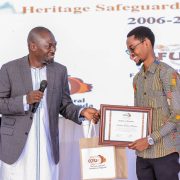
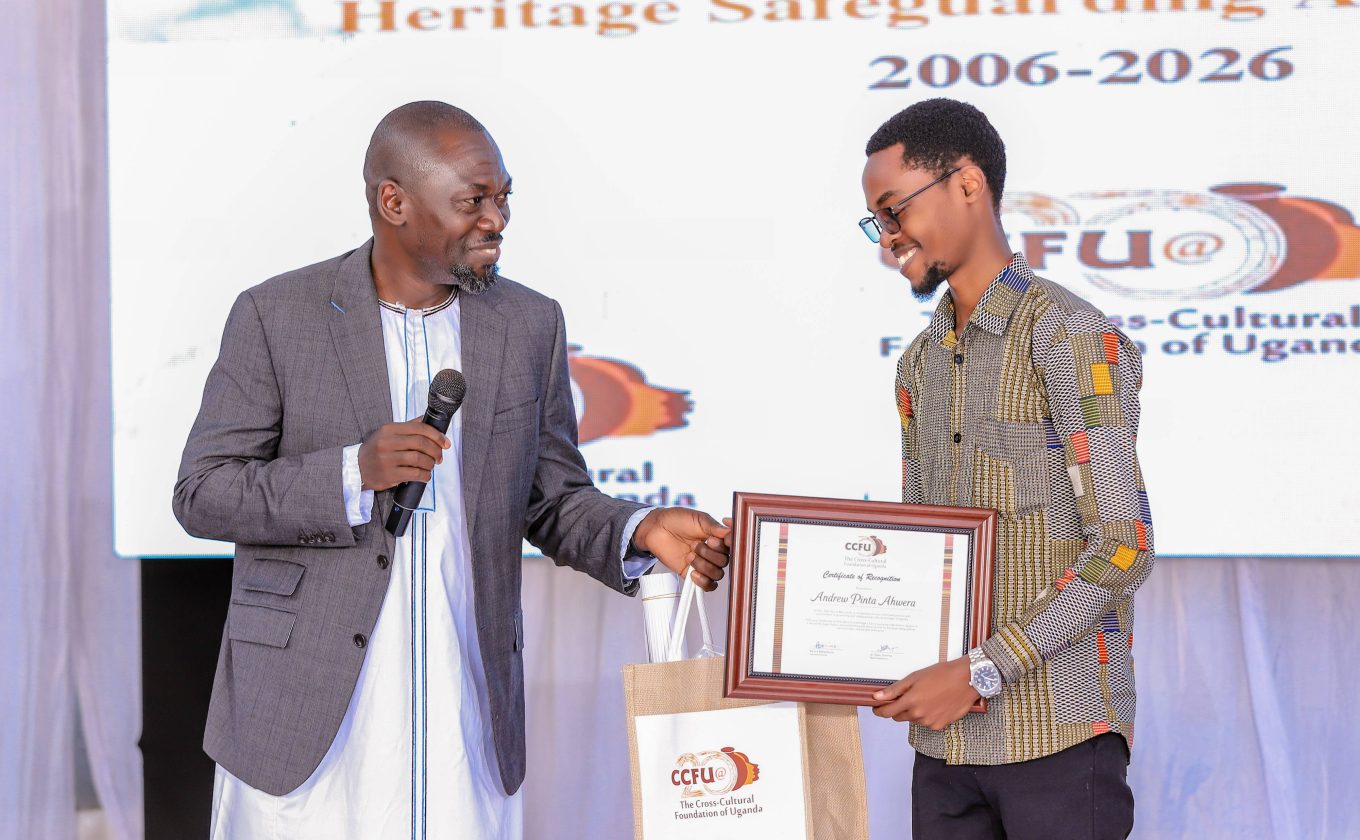
That thinking eventually led to the founding of the Nova Centre for Living Culture and Story Preservation, a youth-led organisation focused on preserving culture while finding ways to make it meaningful and relevant to contemporary society. This year, CCFU recognised him as a young person doing exceptional work as a result of his participation in the Heritage Education Programme.

His journey from a school heritage club to establishing a youth-led cultural initiative illustrates what can happen when young people are given space to explore their identity, develop leadership skills and imagine possibilities beyond the classroom.
Ahwera’s journey has also been shaped by people who recognised his potential and encouraged him to pursue it. Among them are his mentors, Mr. Kalali Christopher and Mr. Fredrick Nsibambi, whom he credits for believing in him, creating opportunities and guiding his growth.
Their support reflects another important part of youth development: young people need more than opportunities to participate. They need adults who are willing to listen to them, challenge their thinking, open doors and trust them with responsibility.
For Ahwera, those relationships helped turn interest into confidence and confidence into action.
Today, Ahwera is both a university student and a cultural advocate. Looking back, he can trace much of his journey to the moment he walked into a Heritage Club at Sacred Heart Secondary School.
The programme not only taught him about culture. It helped him discover what culture could mean for his life.
It allowed him to question assumptions, take on leadership, discover a field of study and begin imagining himself as part of Uganda’s cultural future.
“I can directly trace my path to the Heritage Education Programme. It laid the foundation for my academic and professional journey, shaping my understanding of heritage as something to protect, manage and promote.”
For Ahwera, his experience is also an argument for making heritage education more accessible to young people across Uganda. He believes heritage education should be mainstreamed in schools because it can help young people understand who they are, appreciate diversity and take responsibility for preserving culture for future generations.
But perhaps most importantly, his story shows that heritage education can give young people something beyond knowledge. A sense of possibility.
A boy who once thought traditional dance was not for him became a cultural heritage student.
A student who once imagined a future in writing, politics or media found a calling in culture.
And a young person who joined a school club without much interest is now working to create spaces where culture can live, evolve and speak to a new generation.
For Ahwera, that is what heritage education made possible.
It gave him purpose. And now, he is using that purpose to help others find theirs.

International Youth Day 2026
Ahwera’s story speaks to this year’s International Youth Day conversation that young people are not just beneficiaries of cultural knowledge; they are its custodians, innovators and future leaders.
When young people are given opportunities to engage with their heritage, ask questions and take leadership, they can become active participants in shaping the cultural future of their communities.
His journey is one example of what can happen when a young person is allowed to discover, question and create.