

Semei Kakungulu Museum casts its eyes towards the future on its first anniversary
- 6 months Ago
- 0 Comment
- 5 Min Read

Mbale City, Uganda — The Semei Kakungulu Museum marked its first anniversary with a week-long series of activities on Gangama Hill, drawing cultural leaders, government officials, learners and community members in a celebration that also commemorated 97 years since the passing of Semei Kakungulu.
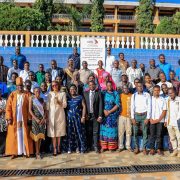
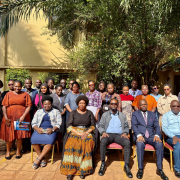
The events, held from November 25–27, brought together representatives of the Bugisu cultural institution led by His Royal Highness Sir Jude Mike Mudoma, officials from the Ministry of Tourism, Wildlife and Antiquities, Uganda Wildlife Authority, Association of Uganda Tour Operators (AUTO), Mbale City local government officials, civil society actors, Semei Kakungulu family members and of the community of Gangama hill, including Kasanvu Village.
The commemorations began on Tuesday with free public access to the museum and a tree-planting exercise on Gangama hill as part of ongoing efforts to restore the landscape. On Wednesday, a city clean-up was conducted before an evening campfire that featured storytelling. The activities concluded on Thursday with an official ceremony that reflected on Kakungulu’s legacy and highlighted the museum’s achievements during its first year of operation.


During this ceremony, the Nkonkonjeru Primary School heritage club presented a poem on environmental conservation. This message echoed Kakungulu’s long-standing advocacy for the protection of indigenous tree species. Further still, the Semei Kakungulu Country Lodge, owned by a Semei Kakungulu family member called Rachael Kakungulu launched the Semei Kakungulu Arabica Coffee, “a legacy brewed on the slopes of Mt. Elgon” to honour Kakungulu’s early role in promoting coffee growing in Bugisu.
“Each bean is handpicked, sundried, and roasted with care to deliver a smooth, bold flavor rooted in heritage. Every bean tells a deeper story of smallholder farmers restoring forests and reviving soil health to fight the harsh effects of climate change. Through sustainable coffee farming, communities are not only preserving the environment but also securing their livelihoods and future,” said Rachael Kakungulu.

The coffee product will enrich the tourism experience at the site and museum, as guests will be taken on a guided tour of the site gardens that showcase sustainable agricultural methods, before crowning it with the tasting of the artisan coffee.
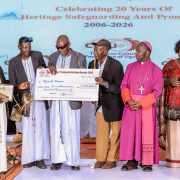
The family also used the opportunity to launch a fundraising drive to raise funds to construct a new family house –having opened up the main house (which used to serve as the family house) to the public as a museum. The new house, according to Dr. Shanon Kakungulu, will serve multiple purposes.
“It will be a gathering place for the family, a home where descendants can convene, deliberate, and strengthen the bonds that unite us across generations. It will also extend the museum’s capacity to host educational programmes, cultural events, and community functions,” he said.
“This project is ambitious, and we cannot accomplish it alone. We call upon our partners ingovernment, our friends in the community, and all who believe in the value of preservingUganda’s heritage to join us in this undertaking. Your support, whether through resources, expertise, or advocacy, will help us build not just a structure, but a lasting institution,” he added.
His Royal Highness Sir Jude Mike Mudoma praised Kakungulu’s environmental leadership and reminded the audience that he is credited with planting more than 10 million trees across eastern and northern Uganda. He said Kakungulu’s legacy continues to motivate communities to take action for climate resilience. He, however, requested that museum should continue striving to be more inclusive.
“The museum programme should incorporate Bamasaaba perspective –the displacement, the coercion, the resistance and the cultural disruption that occurred,” he observed. He also called on CCFU and its partner ‘to commit funds to support Bugisu cultural heritage, preservation of sacred sites, documentation of our own oral histories and recognition of our heroes and cultural custodians’.
“We don’t oppose such a wonderful programme of museum development. We don’t oppose the documentation of Uganda’s diverse past. But if this museum is to stand here in Mbale, then let it stand not as a monument to one individual but as a testament to the full and honest history of this land,” he noted.
The museum was established after the restoration of the Semei Kakungulu Heritage Site by the Cross-Cultural Foundation of Uganda (CCFU) in partnership with the Kakungulu Family Foundation, Mbale City Council and the International National Trusts Organisation, with support from the British Council’s Cultural Protection Fund. Before the restoration, the site had suffered extensive climate-related damage, including leaking roofs, structural cracks and persistent dampness. The rehabilitated main house now showcases Kakungulu’s political, cultural and environmental contributions.
Mr Nelson Abiti, Assistant Commissioner for Museums and Monuments, said the museum has expanded Mbale’s cultural tourism potential and expressed the government’s commitment to supporting its continued development.
CCFU’s Executive Director, Ms Barbra Babweteera, noted that the museum demonstrates the important role of cultural heritage in climate adaptation and argued that heritage should be recognised and invested in as climate infrastructure.
The State Minister for East African Affairs, Hon. James Magode Ikuya, commended CCFU for reviving Bugisu’s heritage and emphasised the value of indigenous environmental practices such as planting local tree species.
In its first year of operation, the museum received more than 2,000 visitors, including school groups and international tourists. It has created employment for residents through staffing, restoration work and garden maintenance. The project has also led to improvements in Kasanvu Village, where the access road to the museum has been graded, electricity has been extended to neighbouring households, and a new borehole now serves nearby families. Twenty women from the Nabugoye Women’s Craft Association were trained to supply handmade products to the museum’s souvenir shop, offering them an additional source of income. Continuous tree planting and the establishment of a flower garden have further improved the landscape around the site.
As the museum enters its second year, it plans to strengthen heritage education programmes, expand conservation work and grow its cultural tourism initiatives.