
Uganda Human Rights Commission (UHRC) staff oriented to mainstream cultural rights
- 3 months Ago
- 3 Min Read
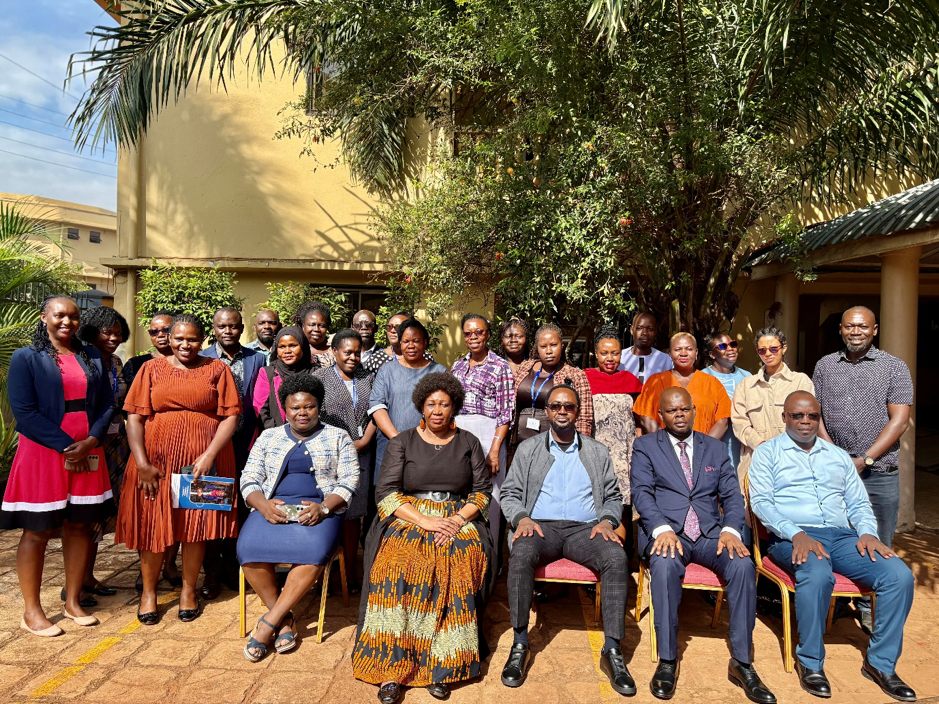
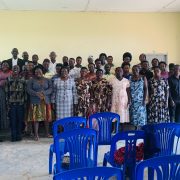
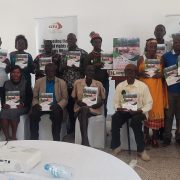
From 30th March to 1st April 2026, the Cross‑Cultural Foundation of Uganda (CCFU), conducted a training on Cultural Rights in Development for UHRC staff in Jinja. The training focused on culture as a dynamic “way of life” that shapes identity, belonging, governance, and development outcomes, and explored how cultural perspectives can strengthen human rights realisation in Uganda’s diverse society.
Opening the training, the Chairperson of the Commission Ms. Mariam Wangadya, emphasized the central role of culture in shaping social identity and values. Drawing from lived experience, she noted that in some communities “males who are not yet circumcised are not called men,” adding that “there’s also something to be proud of there.” She used this illustration to show how culture defines responsibility, courage, and belonging. Reaffirming a key principle of the training, she stressed that “cultural rights are human rights,” and cautioned that legal mandate alone is insufficient to deliver justice, observing that “mandate alone is not enough, capacity is what delivers results.” She urged participants to translate knowledge into practice, focus on women, youth, and minority communities, and ensure that human rights work reflects lived realities.
A central session on Culture in Development was led by the Executive Director of the Cross‑Cultural Foundation of Uganda. She presented culture as a critical enabler of sustainable development and demonstrated how cultural rights and cultural resources contribute to the achievement of the Sustainable Development Goals (SDGs). Drawing on CCFU’s work, she highlighted culture’s links with education, health, livelihoods, gender equality, environmental sustainability, and social cohesion. The session reinforced the idea that development initiatives are more effective and sustainable when they recognise and build on cultural contexts rather than overlooking them.
The training also included a session on Cultural Rights and Mainstream Human Rights delivered by Dr. Dickson Kanakulya (PhD), Makerere University. He emphasized culture as foundational to human dignity, identity, and social coexistence, explaining culture as both tangible and intangible, shaping what he described as the “cultural self.” This emphasis on self‑knowledge and cultural confidence echoed Marcus Garvey’s insight that “if you have no confidence in self, you are twice defeated in the race of life.” Dr. Kanakulya highlighted the historical marginalization of cultural rights within human rights discourse and introduced the multiplier effect of cultural rights, showing how investment in cultural rights strengthens the realization of other rights, including education, health, livelihoods, and political participation.
Overall, the training strengthened participants’ understanding of cultural rights and their grounding in international, regional, and national legal frameworks. It enhanced UHRC staff capacity to integrate cultural considerations into investigations, monitoring, reporting, and community engagement, and reinforced culture as a resource for inclusive and effective human rights practice.
Participants recommended that cultural rights be systematically mainstreamed across UHRC programming, supported by continuous capacity‑building initiatives. As a key next step, the Uganda Human Rights Commission announced plans to establish a Human Rights Museum as a space for public education and dialogue on human rights and culture. Participants also called for regular and continuous training on cultural rights to sustain learning, expand institutional impact, and deepen the integration of culture into human rights protection and promotion in Uganda.