


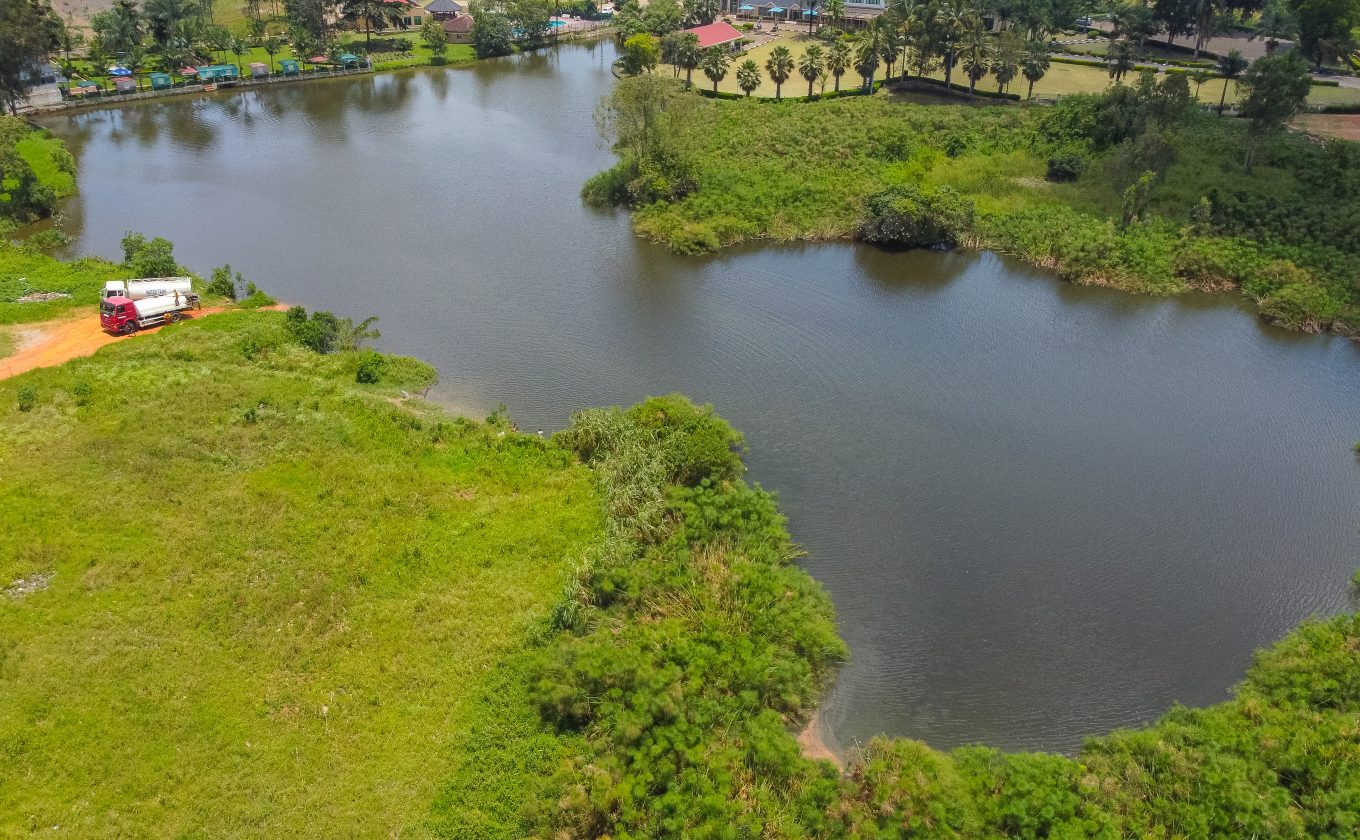
Tucked in a valley near the historic Kamukuzi Palace in Mbarara lies Ekiyanja kyo’Mugabe, a water body whose story is closely intertwined with Ankole’s royal heritage.
Formed naturally between the 1950s and 1960s, the lake came to be known as Ekiyanja kyo’Mugabe, meaning “the King’s Lake,” because of its proximity to the palace of the OMugabe (king) of Ankole. For decades, it has stood not only as a geographical feature but also as a cultural landmark, a quiet witness to the history, leadership, and transformation of the region.
Though modest in size and located within a valley, Ekiyanja kyo’Mugabe has played an important ecological role. The surrounding swamp has functioned as its water catchment area, sustaining the lake through seasonal cycles and supporting biodiversity within the urban landscape of Mbarara. Its presence has helped regulate water flow and provided a natural buffer within a rapidly growing town.
Today, however, this historic water body faces serious threats. Changing climate patterns have made it increasingly vulnerable to drying up. At the same time, encroachment and development activities within its wetland catchment are steadily shrinking the natural systems that sustain it. What was once a resilient natural feature now risks gradual disappearance.
Ekiyanja kyo’Mugabe is more than a valley lake. It is part of Ankole’s living heritage, a reminder that cultural landscapes include not only palaces and monuments, but also the natural environments that shape and surround them.
Safeguarding this historic property calls for renewed awareness, responsible urban planning, and collective commitment. Protecting Ekiyanja kyo’Mugabe means protecting a shared memory, an ecological asset, and an important piece of Uganda’s cultural landscape for generations to come.