Education stakeholders urged to support young people to express their cultures
- 3 months Ago
- 0 Comment
- 5 Min Read

At the just concluded Primary Schools Music, Dance, and Drama (MDD) and Poetry festivals/competitions in Nwoya and Buliisa districts in the Albertine graben, education stakeholders were urged to support initiatives such as the MDD festivals that provide space for young people to express their cultures and nurture their talents.
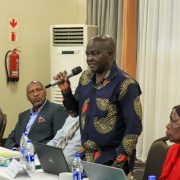
“Participation in co-curricular activities such as MDD is crucial for holistic pupils/students’ development. Co-curricular activities contribute to students’ physical and mental wellbeing, confidence development and overall learning experience,” said Mr. Godfrey Muhumuza, the Buliisa District Sports Officer.
Mr. Muhumuza condemned, especially private schools, for their continued failure to participate in co-curricular activities.
“Private schools have always had an excuse that they don’t have money. Yet they collect money from parents. The pupils/students in private schools are not private. They are government pupils or students. Therefore, we encourage them to prioritize co-curricular activities. Otherwise, we shall be forced to revoke their licenses for not participating in co-curricular activities,” he noted.
The Buliisa district competition, which happened on Friday, August 8th at the District Resource Centre, attracted six (6) all-government schools: Kisansya Primary School, Ngwedo Primary School, Uganda Martyrs Primary School, Biiso Primary School, Bugana Primary School and Butiaba Primary School.
Biiso emerged the overall winners with 1124 points, followed by Kisansya Primary School (945) and Butiaba Primary School (921) in second and third places respectively. In the 4th, 5th and 6th places were Bugana Primary School (875), Ngwedo Primary School (815) and Uganda Martyrs Primary School (443) respectively.
Similarly, for Nwoya district where the competition happened for two days (from Monday, August 4th to Tuesday, August 5th), it attracted six (6) all government schools: Anak Central Primary School, Purongo P7 School, Alero P7 School, Oruka Primary School, Koch Amar Primary School and Nwoya P7 School.
Anaka Central Primary School emerged overall winner with 1166 points, followed by Alero P7 School (1039) and Nwoya P7 School (1009) in second and third places respectively. In the 4th, 5th and 6th places were Purongo P7 School (935), Oruka Primary School (874) and Koch Amar Primary School (776) respectively.
The Nwoya District Senior Inspector of Schools, Boniface Acellam, raised similar concerns over private schools’ absence, noting that only Destiny Primary School competed at the zonal level.
“This contradicts the Ministry of Education and Sports’ push to promote MDD as part of the curriculum,” he said. Nwoya has approximately 70 registered private primary schools.
Michael Opwonya, the Assistant Resident District Commissioner, warned private school heads against boycotting the event and urged the education department to whip them.
“We will meet private school directors to emphasize MDD’s importance,” he said
Benjamin Okello, the MDD Chairperson for Agago District and an adjudicator, cited funding gaps as a major hurdle, noting some schools skip regional contests due to financial constraints.
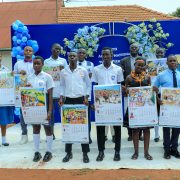
For the second year running, the District Level MDD competitions were supported by the Cross-Cultural Foundation of Uganda (CCFU) in partnership with TotalEnergies EP Uganda that have been implementing the Heritage Education Programme (HEP) in both districts. Among the support were cash prizes (of each 2 million Uganda Shillings) to the overall winners: Biiso Model Primary and Anaka Central Primary that will represent the districts at the regional competitions for Runyege and Nanga regions respectively. Another cash prize of 2 million Uganda Shillings was given to Anaka P7 School that already qualified for the regional competition having won it last year and represented Nanga region at the national competition.
Each of the top three winners for both district will receive a full set of music costumes. Additionally, this year, Project (HEP) introduced the People’s Choice award, which goes to a struggling or disadvantaged school that made it to the district competition. For each respective district, this award was voted for by the festival/competition audience. In Buliisa, the audience voted for Butiaba Primary School and in Nwoya, it was Purongo P7 School. Each of them received a full set of musical instruments.
“We are grateful to our partner, TotalEnergies EP Uganda for their continued support towards engaging young people in heritage preservation and promotion. MDD is one way that young people can express their cultures and we have noted that it plays a crucial role in reducing school dropout rates, especially among learners who may not perform well academically but excel in creative or athletic disciplines. It makes the learning environment more interesting,” said Simon Musasizi, CCFU’s Heritage Trust Programme Manager.
CCFU received its very first funding from TotalEnergies EP Uganda to implement a project titled “Culture for Livelihoods” (CUL), as one of the four Corporate Social Responsibility (CSR) projects flagged off by the Company as part of its ‘Action for Sustainability’ campaign, aimed at showcasing concrete actions towards sustainable development. This initial one-year phase of the project displayed the potential of cultural heritage as a driver for sustainable development and livelihoods in the Albertine region, focusing on handicrafts and traditional music. Support included skills development, provision of instruments and costumes, micro-grants, heritage tourism infrastructure, and formalized collaboration with Murchison Falls National Park.
Building on this success, CCFU received further CSR funding in 2023 to strengthen the Heritage Education Programme (HEP) in Buliisa and Nwoya districts, training 94 teachers, cultural practitioners, and district officials, and establishing 30 heritage clubs in schools.
In 2024, HEP Phase Two expanded the reach, training an additional 61 patrons and establishing 26 more heritage clubs, bringing the total to 56 clubs and 155 trained club patrons.
“Heritage clubs have proven effective in building skills, fostering identity, promoting social cohesion, and creating pathways into the cultural and creative industries. They have enhanced young people’s appreciation of their cultural heritage and created small income opportunities for young people,” noted Musasizi.