Barcelona renews hope to move culture from the margins to mainstream
- 2 months Ago
- 0 Comment
- 3 Min Read
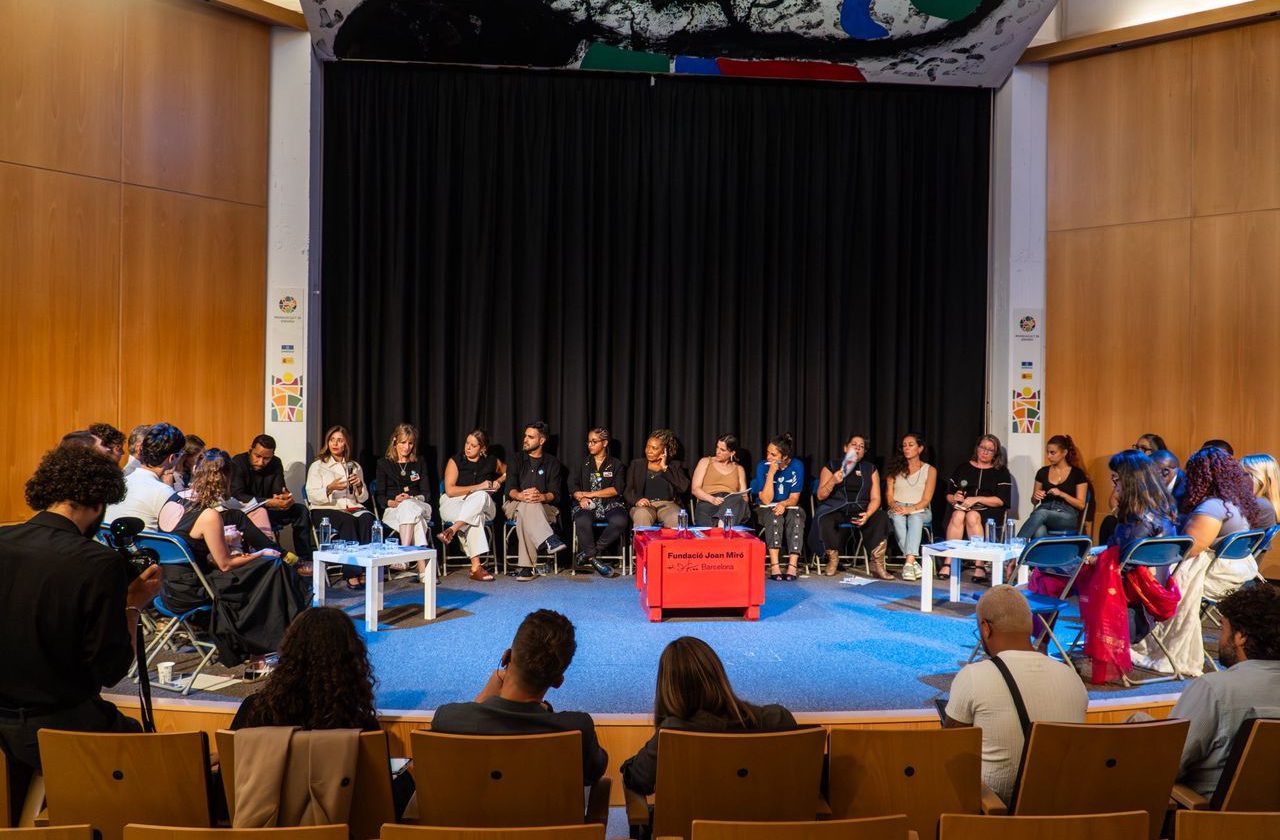
There is renewed hope that culture will move from the peripherals to the centre of global development policies, given the outcomes from two international cultural conferences happening in Barcelona, Spain.
The 6th United Cities and Local Governments (UCLG) culture summit (September 26th – 28th) did not only attract diverse voices from cities, local governments and civil society on why sustainable development that ignores culture is impossible, but climaxed with the “Third High-Level Ministerial Dialogue of the Group of Friends for Culture-Based Climate Action. The group adopted what is known as the Barcelona Declaration, with 17 countries, including Spain, Brazil, United Arab Emirates (UAE), France and South Africa committing to among others, ‘develop concrete and inclusive pathways for integrating cultural heritage, arts, creative industries and indigenous/traditional knowledge systems into climate adaptation and mitigation strategies. This comes on the back of high expectations from COP30 in Brazil for state parties to adopt the indicators on measuring progress of culture related provisions of the Global Goal on Adaptation (GGA).
The UCLG culture summit was followed by the 2025 Mondiacult (September 29th to October 1st), a UNESCO World Conference on Cultural Policies and Sustainable Development. For Mondiacult, it was evident that all cultural practitioners are united with one voice in calling for an independent United Nations Sustainable Development Goal (SDG) on culture. If adopted, it would be SDG 18.
The “Culture 2030 Goal” as the campaign is dubbed addresses a long-standing gap: the absence of comprehensive coverage of culture in the SDGs. It was noted that while culture appears in some targets, the lack of a dedicated Culture Goal has two major drawbacks that are widely recognized:
- First, within the culture sector, broadly understood, the non-recognition of culture represents a missed opportunity to use the shared language of sustainable development to connect diverse cultural dimensions around common objectives — including the sustainability of institutions, jobs, gender equality, and other SDG-related goals. Sustainable development requires sustainable culture. Second, the absence of a Culture Goal limits the transformative potential of culture — understood not only as a sector but as a set of beliefs, practices, and behaviors — to support progress on climate, biodiversity, oceans, freshwater, and cities. Sustainable development requires a culture of sustainability.
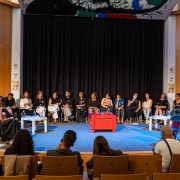
Both conferences were attended by Isaac Eseet, the Climate Heritage Network (CHN) Africa and Arab States Regional Coordinator and Simon Musasizi, CCFU’s Heritage Trust Programme Manager and Co-Chair of the CHN Steering Committee representing Africa and Arab States Region. They both shared experiences from Africa, especially about CCFU’s work with culture and conservation. Isaac was a panelist at two side events; a) Culture and climate action; challenges and agenda, and b) Culture for trust; communities facing global challenges.
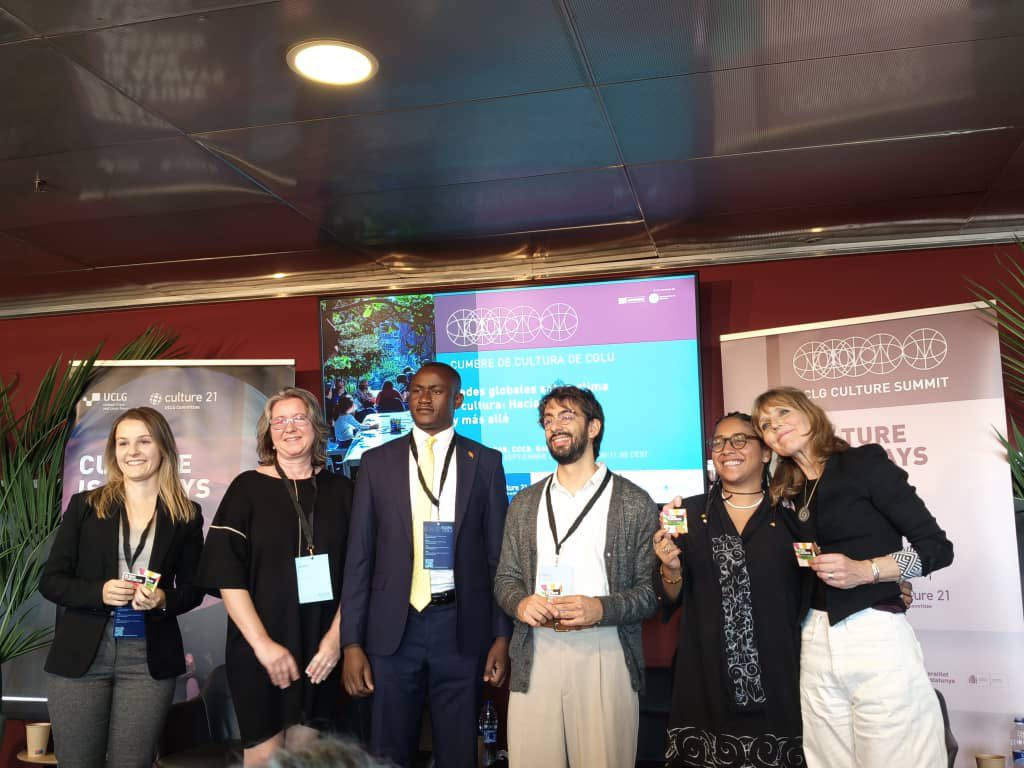
On the other hand, Simon accompanied Princess Dana Faras to the “Third High-Level Ministerial Dialogue of the Group of Friends for Culture-Based Climate Action” where she reechoed to the ministers the urgent need for international recognition of culture in climate action. Further still, Simon spoke at a civic public forum organized under the topic: Global ethical stock-take for culture-based climate action. He shared about the two British Council’s Cultural Protection Fund (CPF) supported projects; “Melting snow and rivers in floods”, which was implemented in and around the Rwenzori Mountains National Park, a UNESCO world heritage site that generated insights on communities’ indigenous knowledge in adapting to climate change. The other is “Withstanding change” that enabled CCFU and its implementing partner the International National Trusts Organisation (INTO) to understand the impact of climate change on built heritage by restoring Semei Kakungulu heritage site in Mbale City.